Protein–lipid interactions
Quantify lipid binding, selectivity, stoichiometry, competition, and cooperativity at the level of intact membrane protein complexes.
Research
Biological membranes are chemically complex, dynamic environments. We develop and apply native mass spectrometry, structural biology, biophysics, and protein engineering to determine how lipids, metal ions, and other molecular partners regulate membrane proteins.
01 · Molecular recognition
Membrane proteins interact with a chemically diverse lipid environment rather than an inert solvent. We ask which lipids are selectively recognized, how acyl-chain and headgroup chemistry influence binding, and how these interactions propagate into changes in protein structure and function.
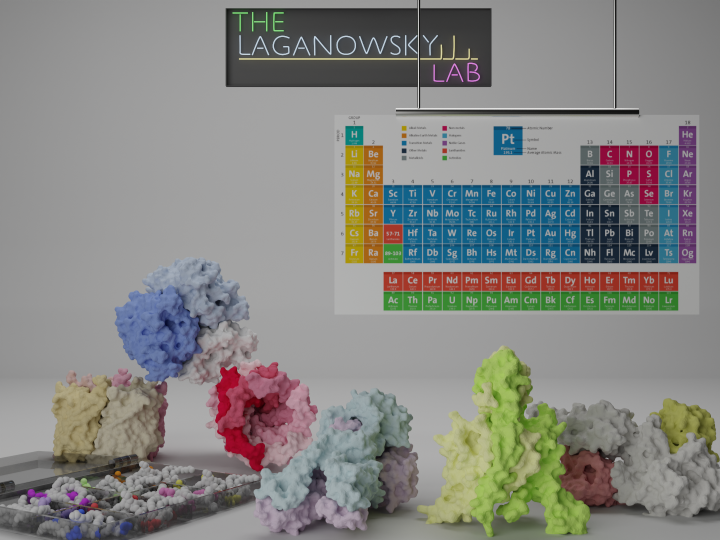
Quantify lipid binding, selectivity, stoichiometry, competition, and cooperativity at the level of intact membrane protein complexes.
Define how metal ions and other chemical inputs reshape lipid recognition and alter membrane-protein assemblies.
02 · Force sensing
We investigate how membrane composition, lipids, and metal ions tune the conformational landscape and pressure sensitivity of K2P channels, while related studies probe chemical regulation of Kir channels.
Connect defined membrane chemistry to lipid occupancy, conformational changes, and the molecular mechanisms of force sensing and gating.
Investigate how chemical inputs modulate lipid binding and cooperative regulation in inwardly rectifying potassium channels.
03 · Technology
Native MS preserves noncovalent interactions and provides direct access to intact molecular assemblies. The laboratory develops methods that extend these measurements to increasingly native-like membrane environments and to processes that have traditionally been difficult to quantify.
Resolve individual lipid-binding events and quantify how membrane chemistry shapes molecular recognition.
Use time-resolved native MS to directly measure biomolecular association and reaction kinetics.
Study intact complexes in detergents, proteoliposomes, nanodiscs, and saposin-based nanoparticles.
Develop charge manipulation, direct mass, ion-mobility, and complementary strategies for challenging assemblies.
04 · Mechanism
Mass spectrometry reveals what is bound and how strongly; structural and functional measurements reveal why it matters. We combine cryo-EM, crystallography, mutagenesis, and biochemical or cellular assays to connect molecular interactions to mechanism.
Determine structures in controlled lipid compositions to visualize conserved and lipid-dependent conformational states.
Test mechanistic hypotheses using mutations, functional measurements, and complementary biochemical approaches.
Biological systems
The laboratory works across membrane proteins and membrane-associated signaling assemblies, using systems that expose different aspects of molecular recognition and regulation.
Mechanosensation, lipid modulation, metal-dependent regulation, and membrane-coupled gating.
PIP2 recognition, metal coordination, and cooperative lipid binding.
Membrane-protein lipid interactions, cofactors, conformational regulation, and transport mechanisms.
Membrane-dependent assembly of oncogenic signaling proteins and the chemistry controlling their interactions.
Browse the lab’s full publication record, including recent work in native MS, membrane-protein chemistry, and structural biology.